Cable management is important on a well designed bike. There is an art to placing them in precisely the right location. It’s even better if that can be done with a tidy and clean appearance.
One solution to this that many arrive at is to get the cables inside the bike as soon as possible so they can’t be seen. This is a shortsighted method as it often creates more problems than it solves. Working on the bike is made harder. Swapping parts is made harder. Often, the bike is made to work worse. Changes don’t happen. This is not how good work is done.
I’ve spent years working on this problem and have solutions that few others use. To get to something good, I need to understand how we work on the bike in the shop, in a parking lot panic, or by the side of a trail after a crash. I need to think of how a line can be routed to be as mechanically efficient as possible. How can I prevent problems from developing? I also look at the bike in 3D model space to find precisely the right locations to hide the cables from view and align them as needed.
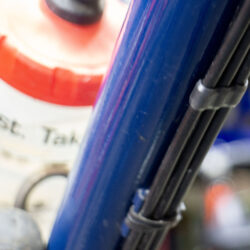
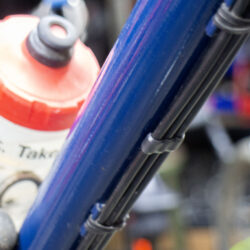
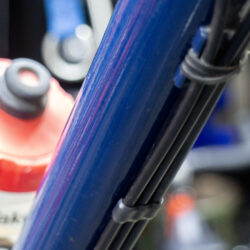
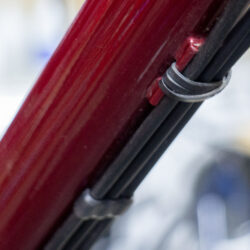
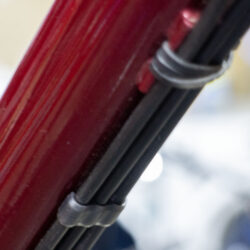
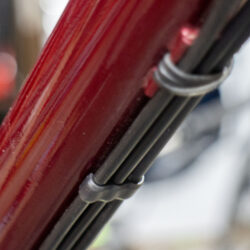
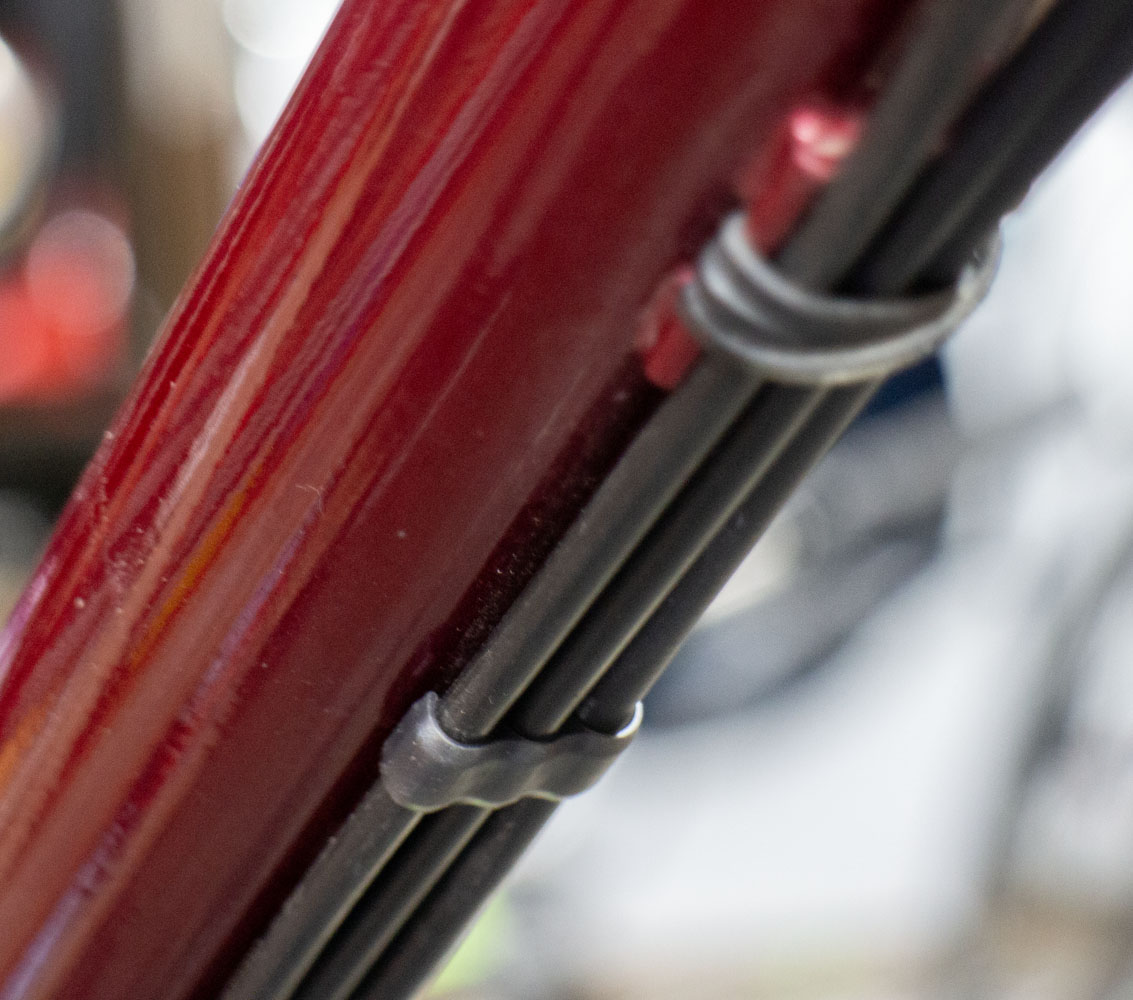
From this, the underside of the down tube becomes a crowded space. Two cables and a hose run along the length of it. My braze-ons hold them fast at four points and as close to the tube as can be allowed. This works well. Still, in the spaces between the braze-ons, the lines can wander slightly creating clutter when closely examined.
I’d been meaning to do something about this beyond taping them together. That’s not a great solution as servicing the lines is made more awkward. So, clips. Clips are nothing new. Many people have used them. I would do it specifically for my configuration.
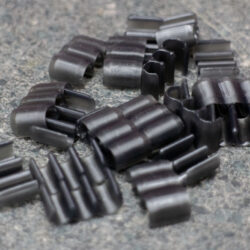
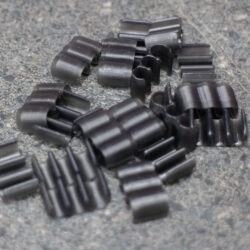
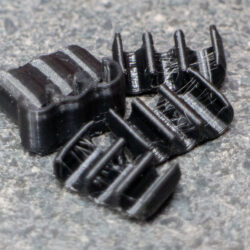
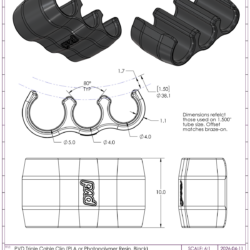
Several rounds of prototypes led to what you see now. A fairly clean and elegant clip. The center axis of each line is matched to the braze-on so that it is as straight as possible along the run.
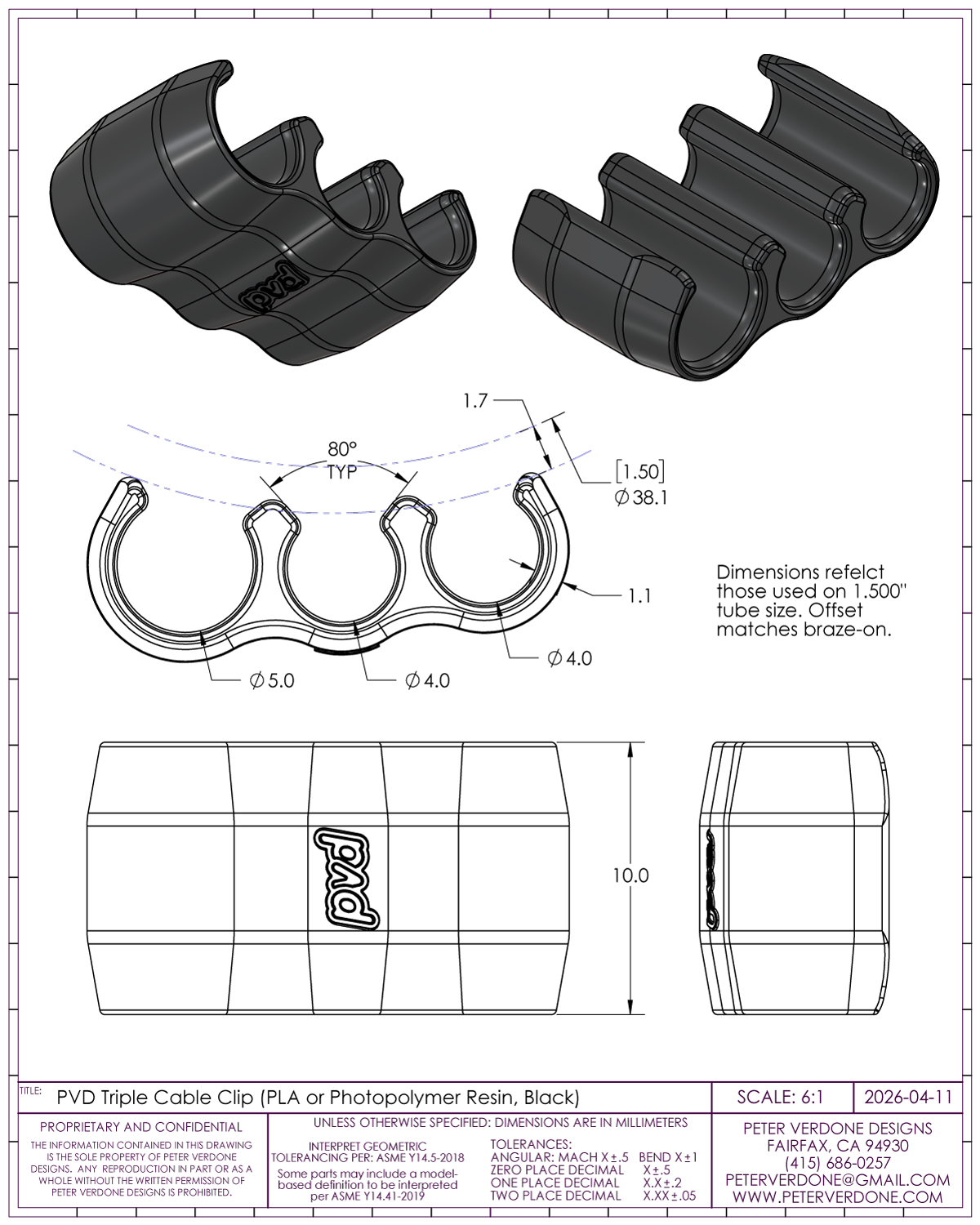
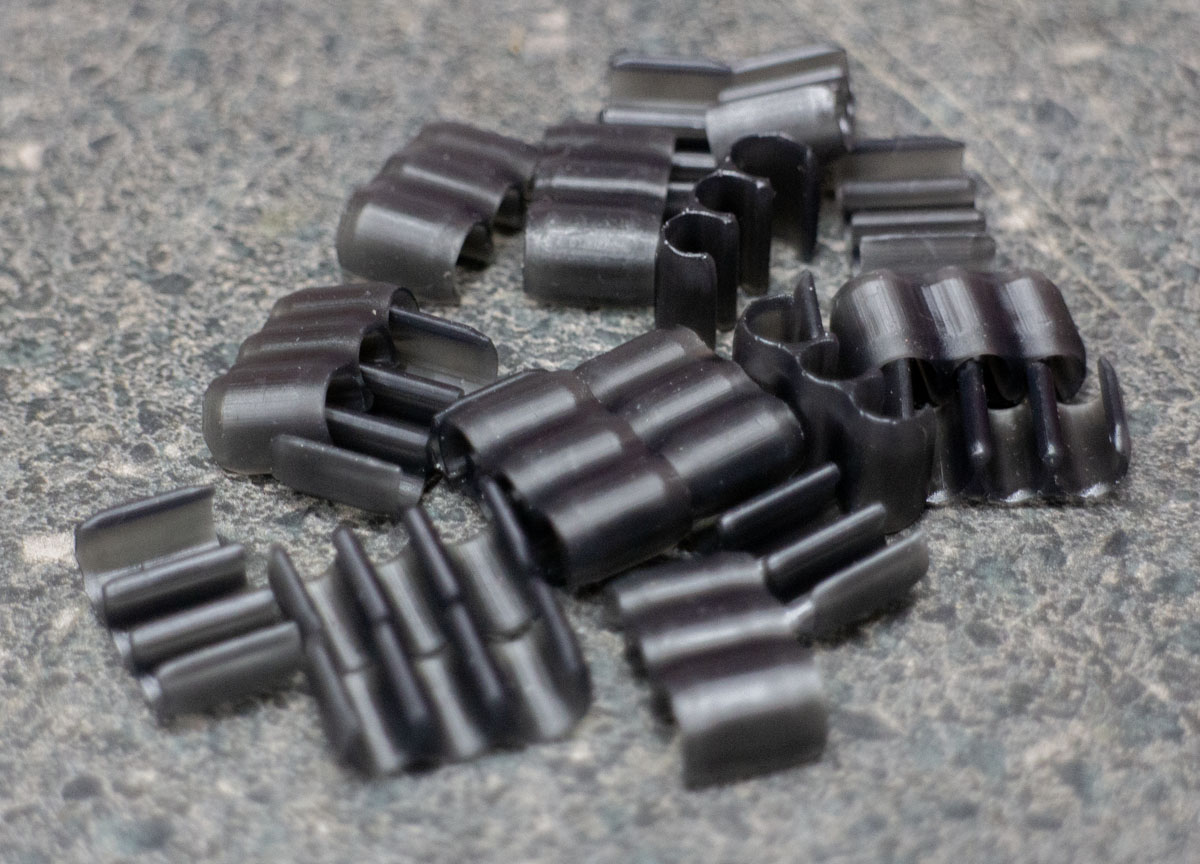
In general, the photopolymer resin prints are superior to the extruded PLA. This as the 16.8 x 24.8 micron (square) dot size ensures a very high quality rendering. Here, the resin was a mix of black and clear resin so the shade can be improved in another batch.
A detail to figure out is that the resin print is not close to the stiffness of the extruded PLA. The hardness of the Anycubic Tough Resin 2.0 shouldn’t be any higher than the claimed hardness rating of 82 Shore D. Next week we will look deeper into this but the clips function fine for now.
While I remain a fan of using zip-ties to fasten the lines to the frame, I may investigate future use of a clip for this. The cleanliness in appearance may be improved but the resistance to release in a snag could be considerably reduced. As this would ruin a ride, I have to be careful about a choice that I might mike.