
I like to think about thinking. The process of how an idea gets from A to B is one of the most magical things I can imagine. I try to get better at it but that has always been difficult. Why? Because I want to predict the future.
I have a problem. Often in discussions with others, I see an inability for them grasp the fundamentals of statistics. This limits grounding in what they believe and say. They can’t predict the future intelligently. Even though I work on a University campus and have many discussions with a range of students and academics, a myth has “become fact”. It’s spread into the wider society and it’s a real problem for understanding much or predicting the future well.
“Not all ####!”
Most understand the concept of a normal distribution and a bell curve. We have a high probability of landing in the center and a low probability of landing far to the sides. It’s a very handy way of looking at probability and predictability. Normal distributions are not expected in the real world. It’s a mathematical concept that might be replicated in certain experiments of chance, but rare otherwise.
Asymmetric bell curves are common. Almost universally, skew or multiple distinct components will be present in a population. This due to natural selection, self selection, predators and prey, or a myriad of reasons. It may be slight but it will be there. Often it’s glaring. We need to be able to see that.
I talk a bit about this topic (back in 2018):
In this discussion, I’m going to be working with Gaussian Mixture Models.
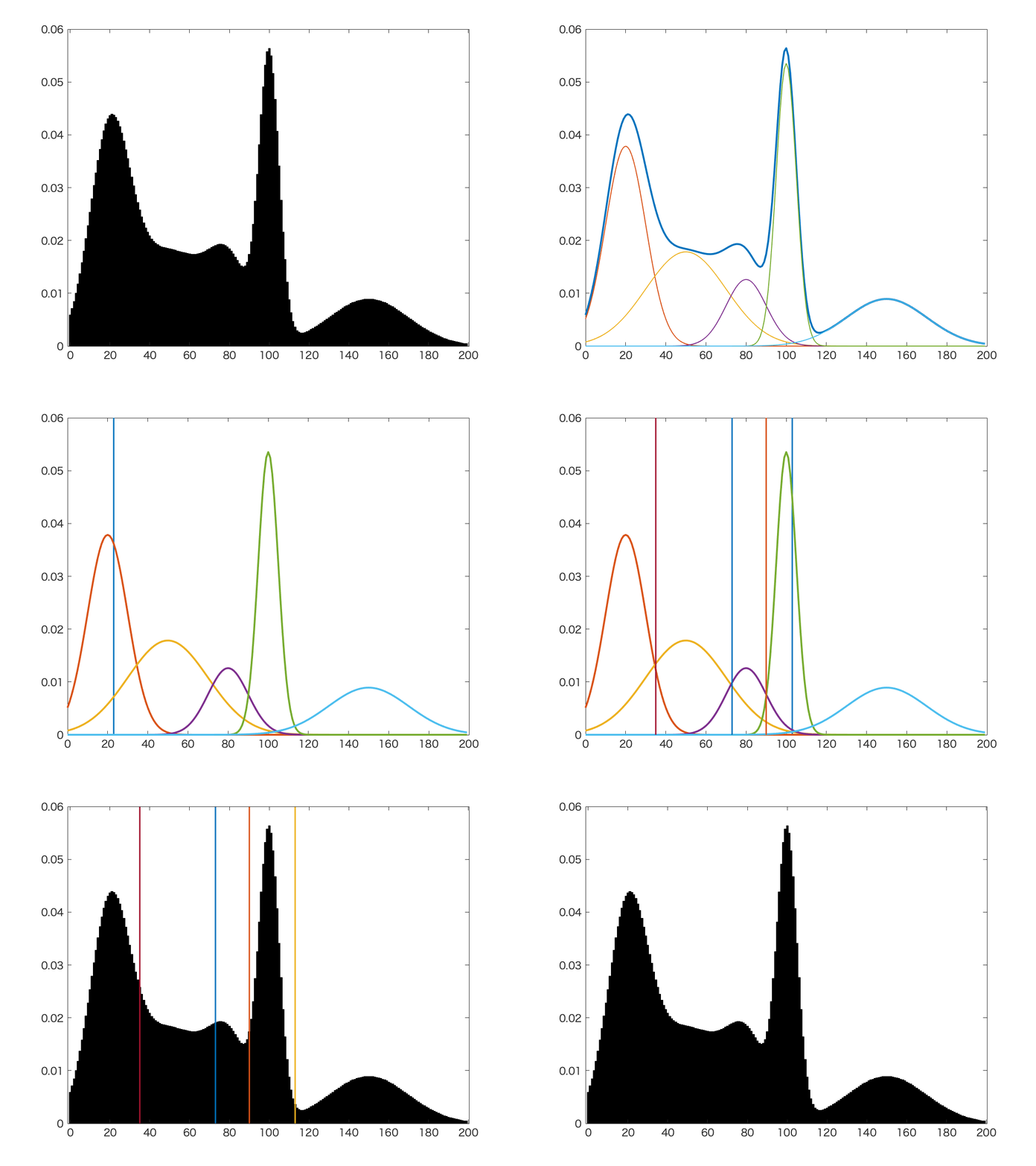
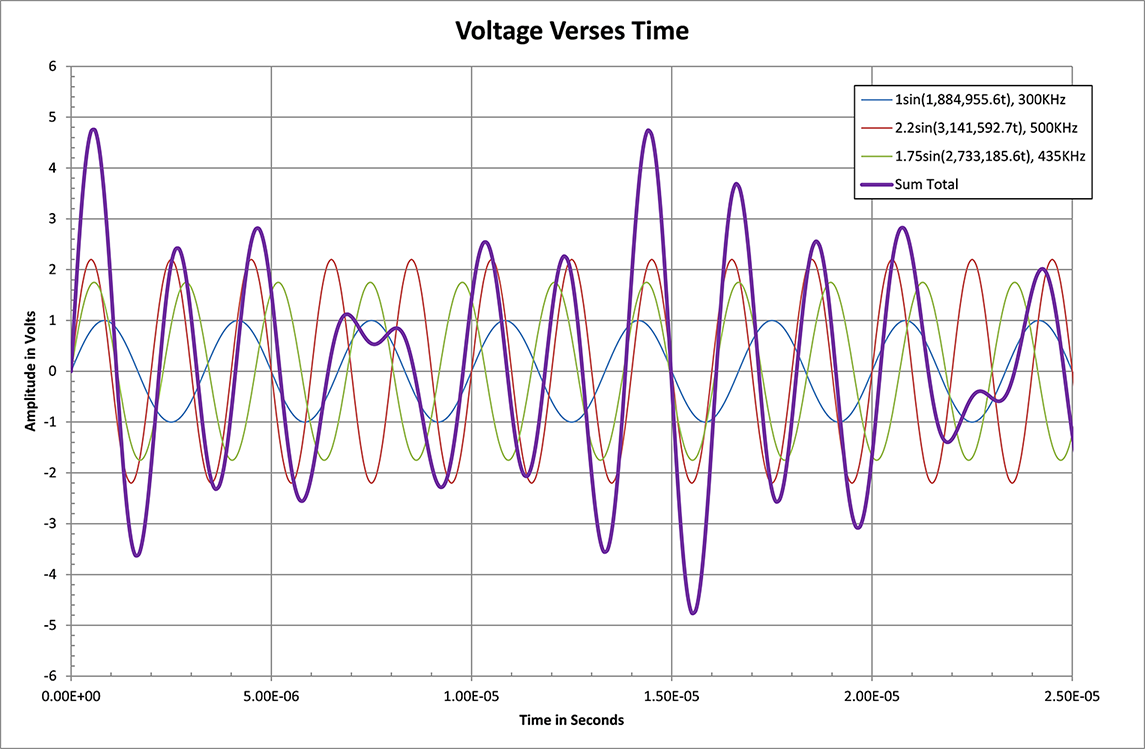
For folks better with electronics, it would be understood like in a spectrum analyzer for decomposition of populations.
Let’s pretend we have a normal distribution of a population that’s made up of two groups. The popular understanding is that these two groups will be equal fractions of the total population. What is true for one component group is naturally true for the other.
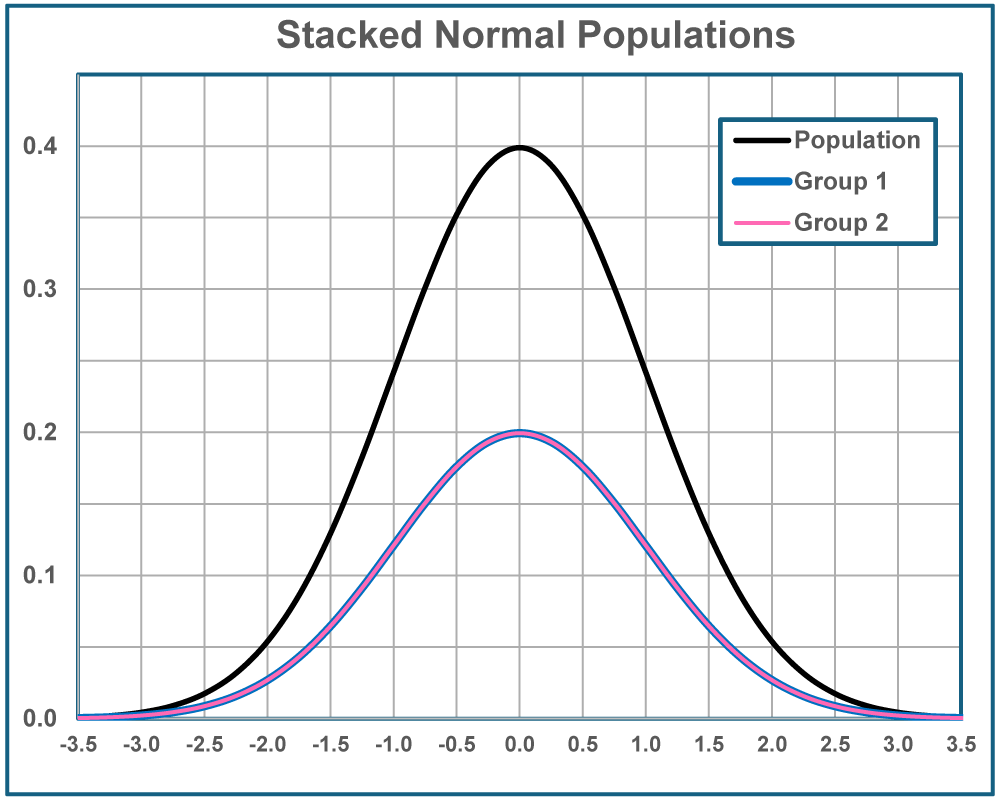
Of course, this is very wrong and not a rational way to understand the world. If these two component groups are identical, why are they grouped?
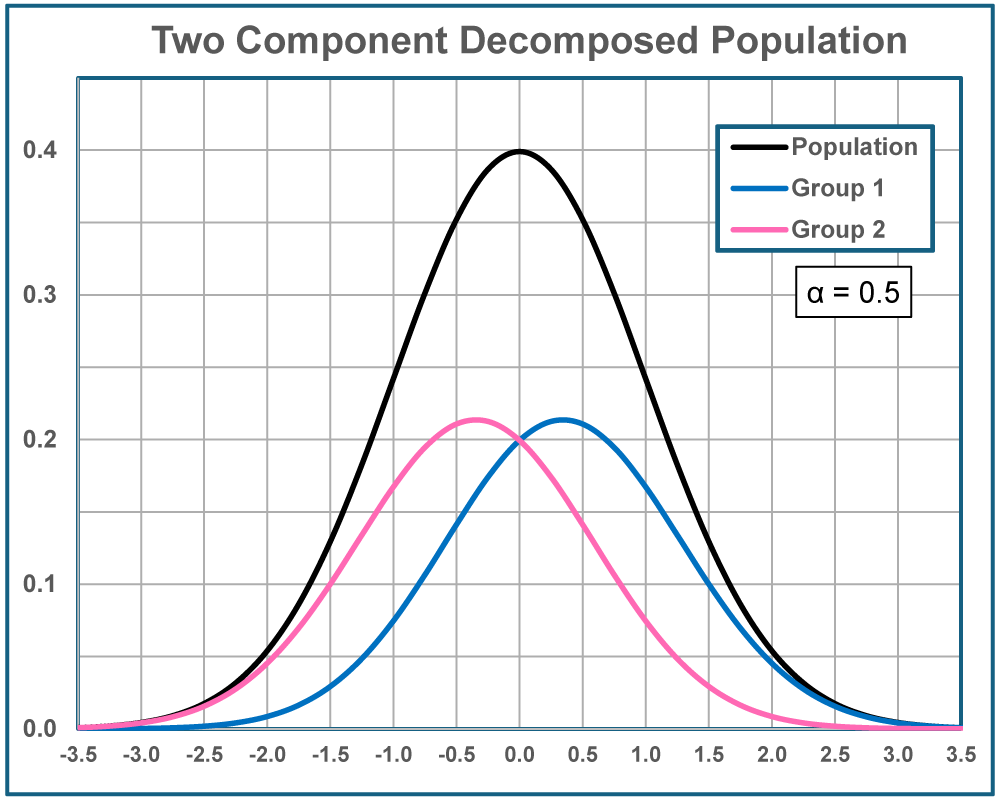
Component groups are not the same. That’s why they are described as different groups. Shown below is a normal distribution made up of two component distributions of equal numbers. The distribution of the entire population is normal but the components are shifted and skewed. Added together they produce normality but they are quite different components.
It’s possible that a member of either group will land any particular value but it’s not probable. In the center of the values, we are just as likely to see either group member. That changes as we move in either direction. We don’t ‘expect’ to see a member of Group 1 in the low values just as we don’t ‘expect’ a member of Group 2 in the high values. Possible, yes. Probable, no.
We can imagine another universe with three equally sized groups making up the population. Each end group is far more represented at the edges than the others. The center group being outnumbered in (almost) all conditions but better represented than the other two throughout.
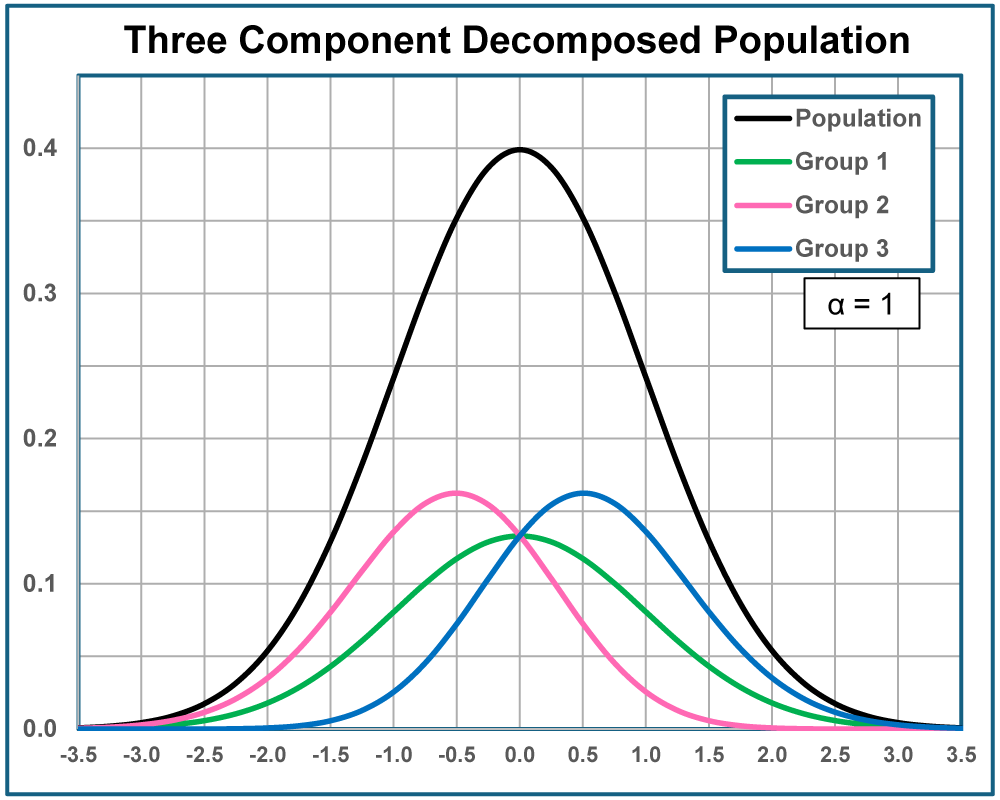
Obviously, these are extreme simplifications as any population would more likely be made up of huge and numerous component groups.
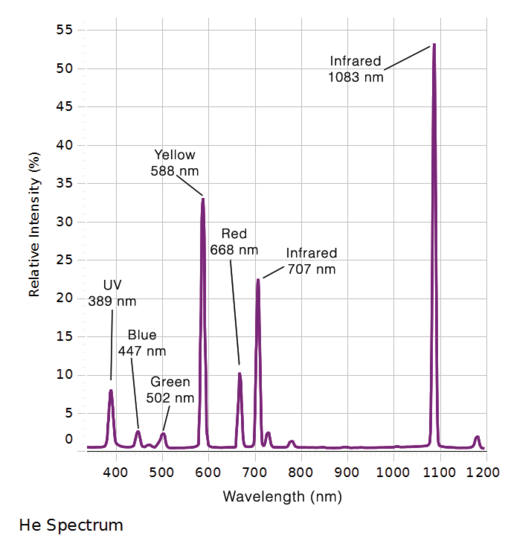
Individuals within these groups would best be described with a spectrograph, like those we see for atomic composition. I like the spectrograph idea as it’s both scientific and lends itself to the hundreds or thousands of ways an individual can be seen when not grouped with others ,according to one arbitrary quality.
Getting to the point of all this; when we here expressions like “Not all ####!” in a discussion or argument, we hear the position that component group distributions are or should be identical, like in my first example. It’s masked in the truth that long tail outliers exist in all groups. The fallacy is that expectations or probabilities for an individuals are the same, when we know they are not. This isn’t a useful way to think. and prevents future prediction.
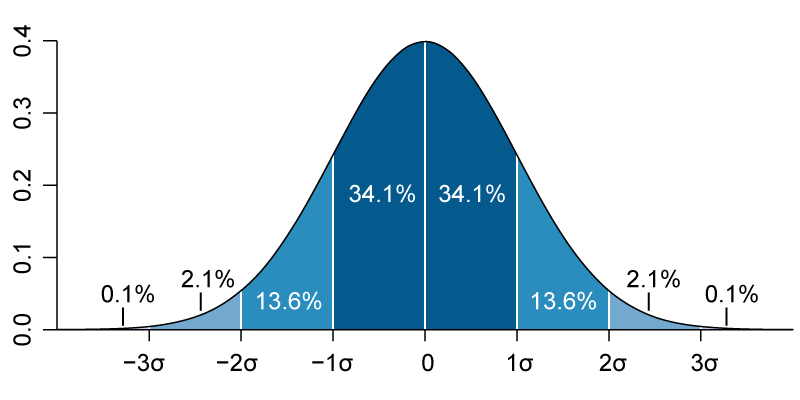
We need to understand outliers exist but expect results within two standard deviations of a group set, not even the full population. That is where 95% of our outcomes reside….within that group. Within the population, depending on where the distribution lies, we might ignore the group outright. We would expect outliers to be present from just one group.
Predictive evaluations are crucial to our survival as animals and progressing science and society. If I’m trying to be predictive about the future, behavior, or representation, I need to understand that different groups of people will have differing distributions under the curve than the entire population. There exists a women stronger than most men. There exists a man lighter than most women. They are extreme outliers and, definitely, unexpected. I would be foolish to insist that the next person that I meet will fall into either of these states.
In society today we don’t believe in science or math, if we ever did. Political allegiance is all that has come to matter and anything that helps the “other side” is heresy. Partisans rule. Few actually believe in science..
They just believe in the science that supports their argument.