
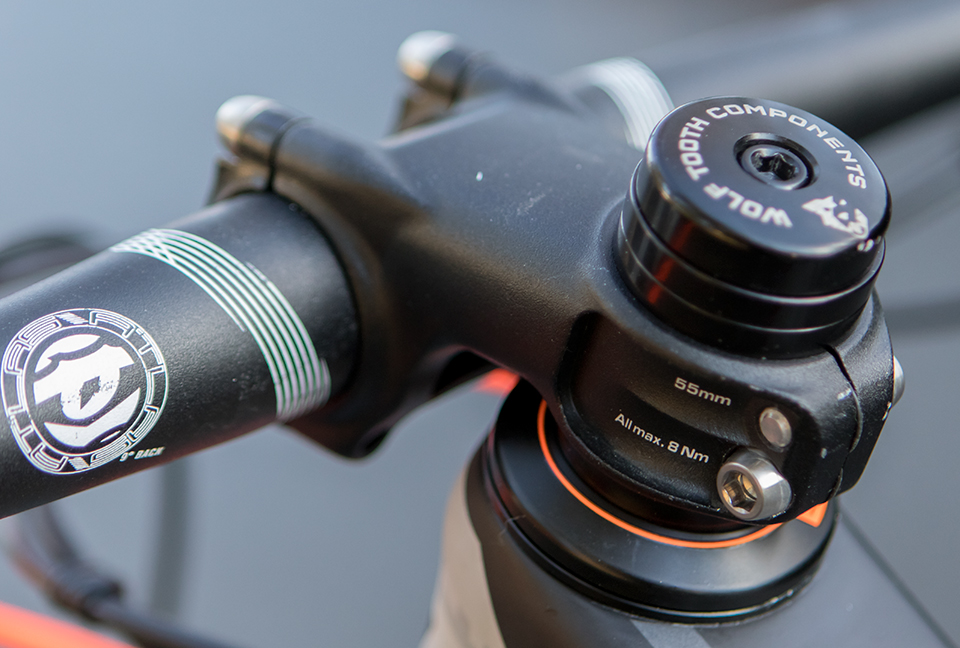
The arrival of the 32″ wheel has given the bicycle marketing people from around the world a chance to demonstrate (in real time) how little they understand about fundamental bicycle geometry and design. I’m actually embarrassed for the media companies, frame builders and marketing companies that are so heavily publicizing their incompetence. Wow!
Drawing a bicycle is not hard. A few critical dimensions shape the bike in meaningful ways. The rest are just details. The problem arises when you don’t know what these dimensions are or why they matter. Despite over a decade of serious effort, I’ve been unable to get others to understand.
I’m not going to say that producing a mountain bike with a 32″ front wheel is easy or trivial. Even I have challenges getting to what I wish for but I’m looking at what matters. When I look at the ‘designs’ that we are seeing in the market, it seems nothing matters as long as the wheel is there and marketing is done. Most are terrible bicycles.
The challenge that I speak of is having hand grips in the appropriate location, a sufficient amount of suspension travel, and a reasonable front center distance. Preferably, this can be done with a steeper rather than slacker head angle. Even without having actual fork geometry on hand (few good options currently exist), it’s tough to make it work.
Desperation. We’re seeing all kinds of wild stems show up. Here’s an especially terrible example shown in BikeRumor: (granted, most of this clutter is steering stop rather than stem). Why stems? Because stupid and easy.
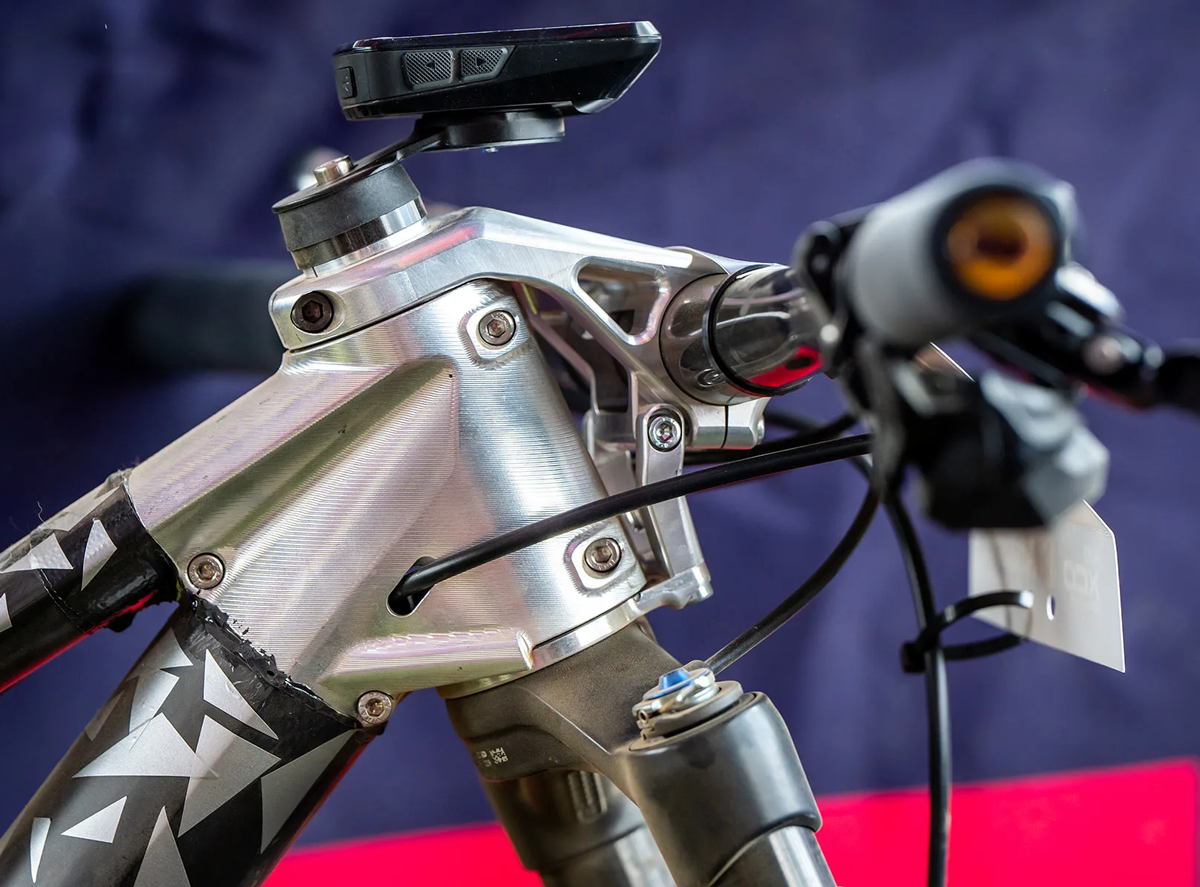
Notice the sweep of the handlebars on this bike. I expect that these are similar to most commodity handlebars. Those for mountain bike use will typically have a 9 degree sweep. What does that mean? We can look into that. I have a model of a Race Face Atlas Flat bar with a 9 degree sweep in 785mm width. This bar has a 46.2mm offset from the clamp to the bar end. Other bar shapes and widths will have far less (in this case, 43.4mm at 750mm wide, = 46.2 – TAN(9) * (785 – 750) / 2 ). This is contributing to many of the problems for folks to move to more modern setups in general but in this case specifically.
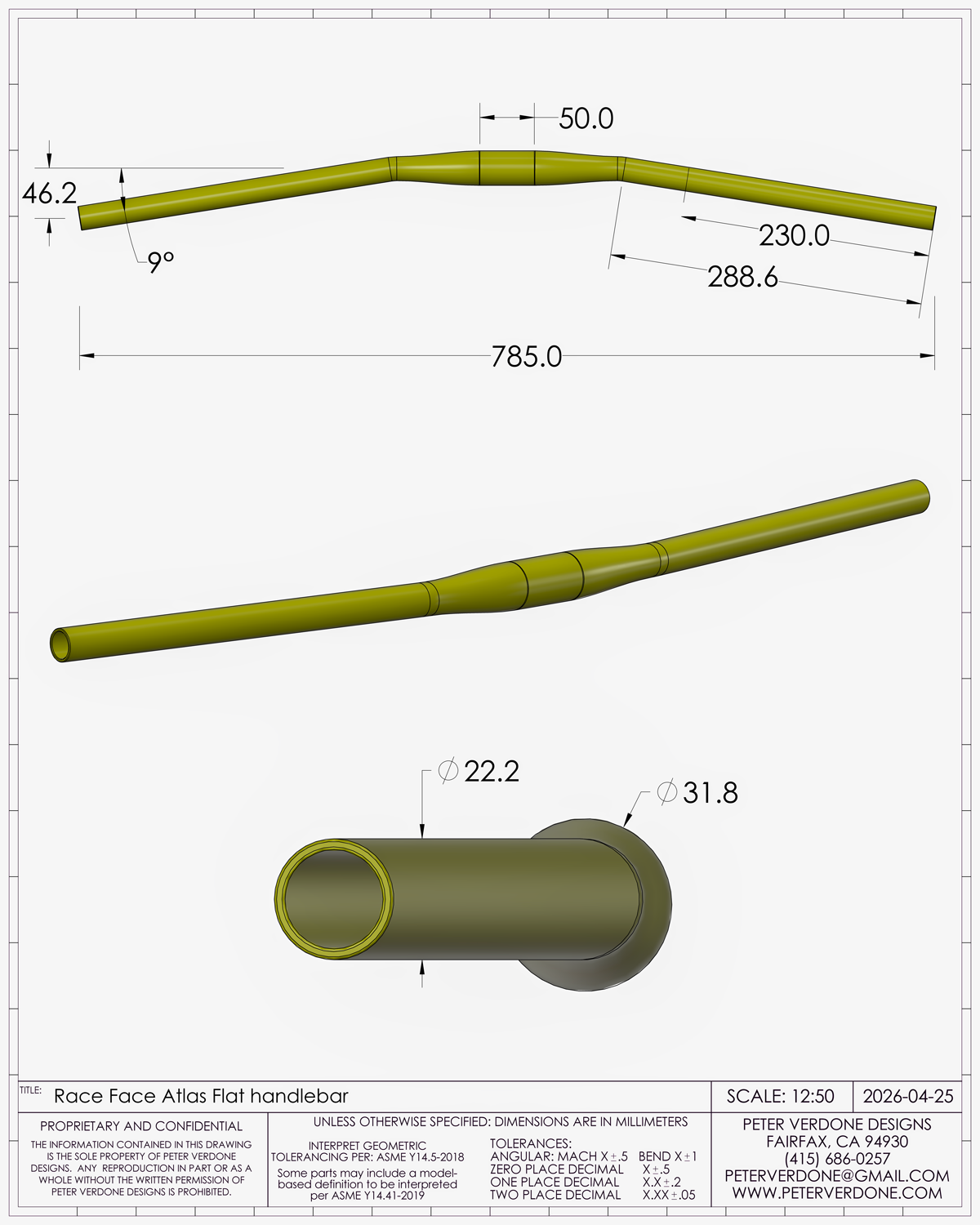 There are a lot of historical reasons why this sweep is so common but few of them should have any bearing on what we would be choosing today. Let’s just say that sweeps less than 10 degrees really only have a place in gravity disciplines where a rider will be catching the weight of their body similar to a weightlifter doing a bench press.
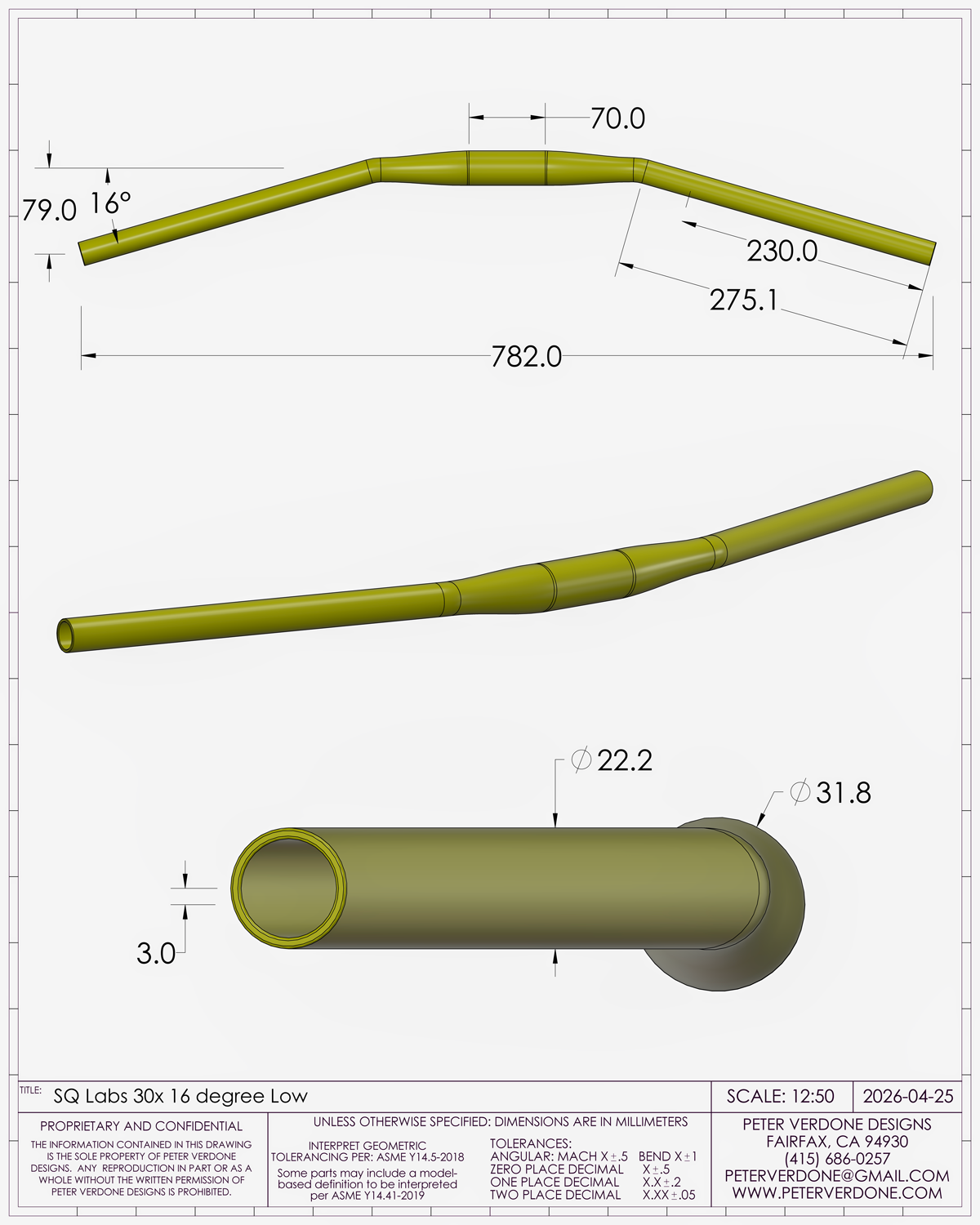
Riders outside of that realm should be looking to higher sweep bars. Much higher. The highest sweep performance oriented handlebar available that I know of is the SQ Labs 30x 16 degree. (just added Corvus Sweet 16 Alloy Bar) This would be my very minimum sweep angle. Besides being far more comfortable in almost every use case, it’s got a 79mm offset from the clamp. That’s about 33mm farther back from a commodity bar! That’s very valuable real estate for a bike designer. You would think that more people would have seen this.
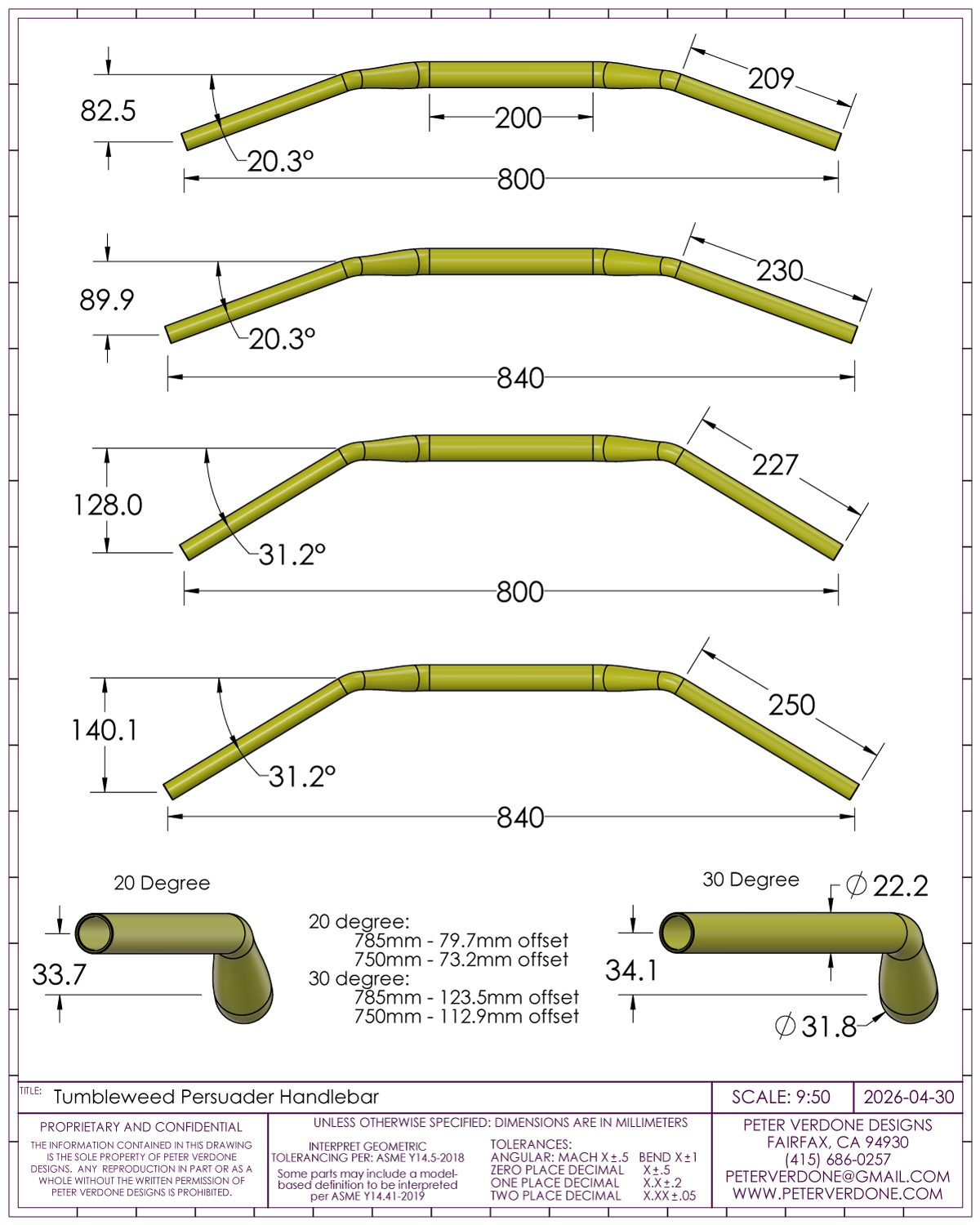
Another possible option is the Tumbleweed Persuader Bar. It has 20 or 30 degree sweep without the gross forward shift that most high sweep bars have. It’s not perfect for performance use but it may be better than many options especially for smaller riders on a 32″ bike.

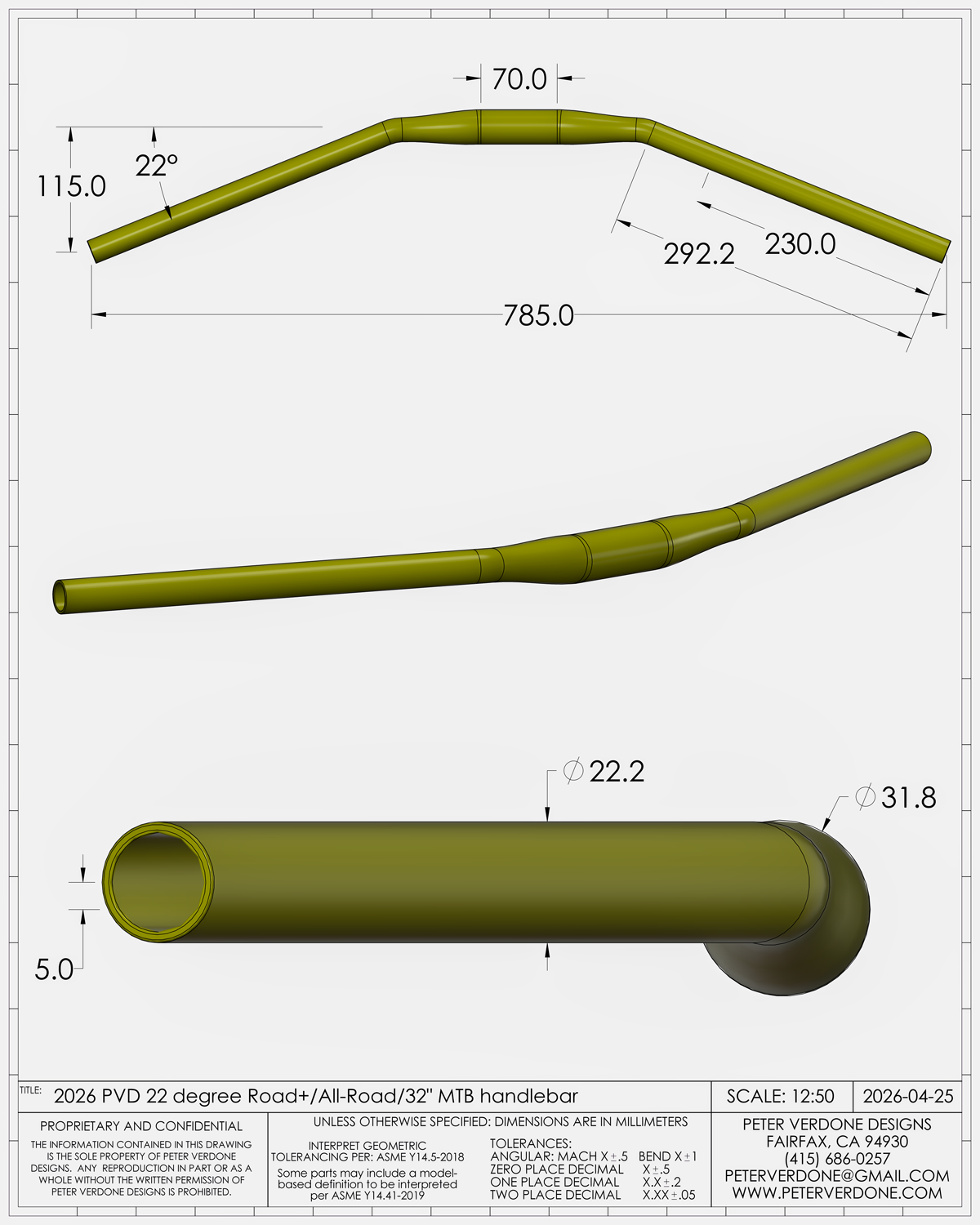
My current bikes are using 20 degree sweep bars. Nothing perfectly usable is available in this range on the market. Let’s imagine a 22 degree sweep that is intended to be comfortable for long fast rides and help us when designing a 32″ bike. What I show below has a 115mm offset from the clamp. That’s 69mm farther back that a 9 degree bar might have.
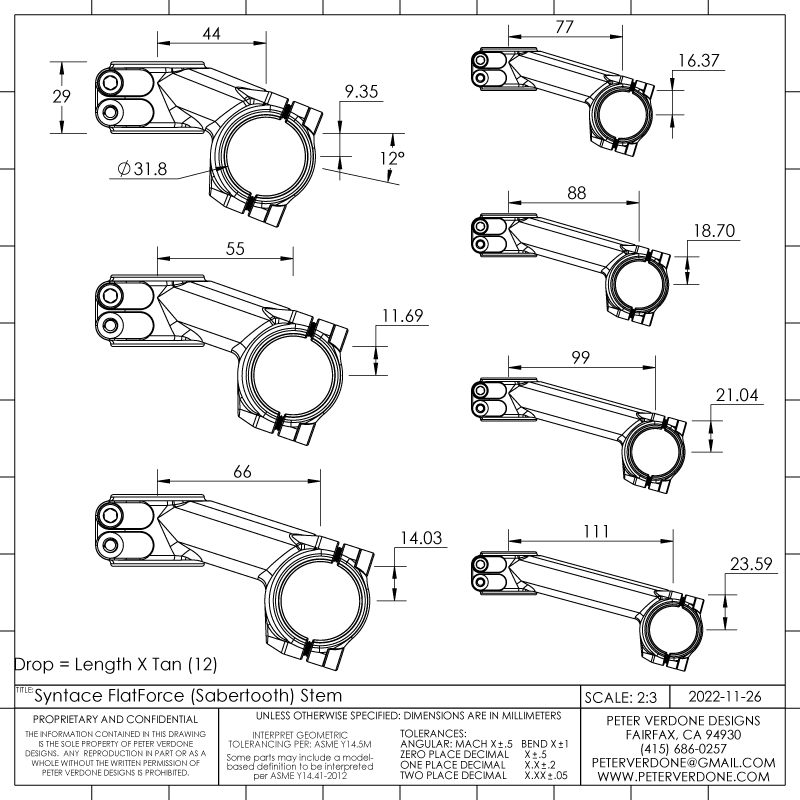
For stems, let’s also not forget that the Syntace FlatForce/Sabertooth has been almost totally ignored in the market for the last few decades. I used these often prior to my era of bespoke front ends. Let’s use the 55mm version of this off the shelf part along with our imagined bars.
I quickly designed a bike (in BikeCAD) using the imagined 22 degree sweep bar and a Syntace Sabertooth 55 stem. I commodified the geometry some from what my bespoke bike would use and took a guess on fork spec. I have my exact preferred handgrip location, a 130mm travel fork, and a 812mm front center. I even have a 5mm spacer in place for some adjustment.
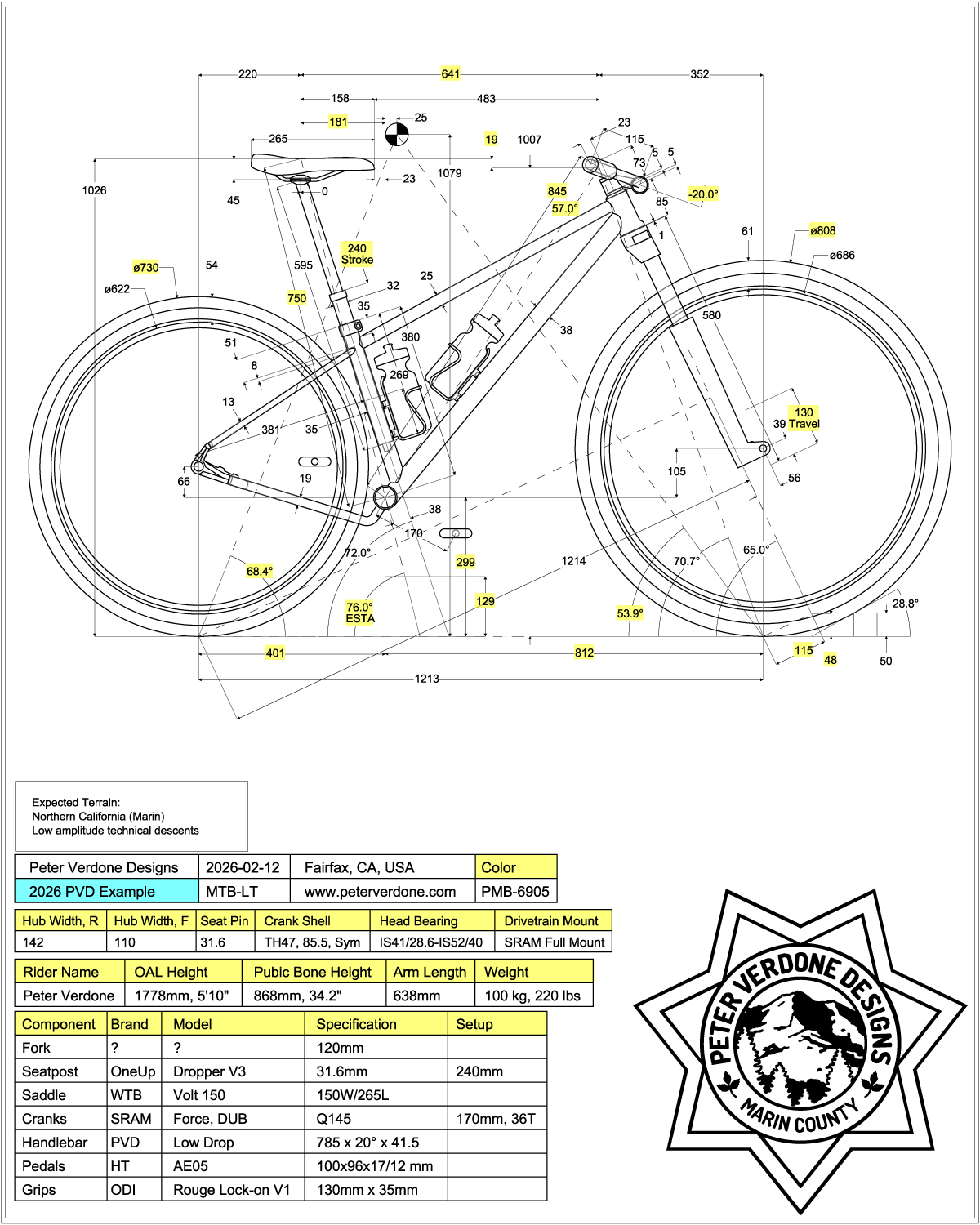
While this bike is a far shorter and slacker than I would consider ‘modern’, it is far and away better than anything I’ve seen shown in media. It’s a real mountain bike, even though the fork is quite short. The difference here is the handlebar. That’s the difference maker.
But this get’s better. Like years past, there is a time when we invert riser bars in a setup. If we swap in a commodity riser bar, the SQLabs 30x 16 degree MID, everything changes. Suspension can go up to 140mm WITH a 100mm head tube. Front center goes UP to 832mm. How’s this, a standard 30mm stem! What happens here, changes everything. Going up to a 20 degree sweep or a “lower rise” handlebar, we can have a longer bike, or a longer stem, or a longer fork, or a steeper head tube, or fit a smaller rider. Handlebars. It’s about handlebars.

Let me be the first to say, we need better handlebars, not crazy stems. This is the real problem. We probably won’t see this for a long time because frame designers don’t understand frames or handlebar and handlebar designers don’t understand frames or handlebars. It’s a devils threesome with the consumer in the middle.
ALSO. I really do love where BMC is going with the steering stops. This allows for a well designed down tube. I may look into this for my designs as we move deeper into the 32″ era. If fork manufacturers help out with this, it can make a real difference.