
It’s come to this, winter and the 32″ wheel. We knew it was going to happen.
Once the rains start showing up in late October and early November it’s time to mount up our front fenders for NorCal mountain biking. I’ve discussed fenders several times in the past. Very few riders around here use a(n) (actual) front fender which is dumbfounding. Low performance setups for stupid riders.
With the arrival of the 32″ front wheel, we have new problems. Mud in our eyes. A twenty-nine inch wheel just barely fit in the RRP ProGuard MAX front fender. Clearance was close and spray protection was just useable. Years of heavy use have proven this product over all others.
Placing the ProGuard MAX V1 over the thirty-two inch wheel is harrowingly close clearance. Worse, spray protection is only partial at eye height. Where I used to have confidence charging into standing water, I now had doubts. We need more.
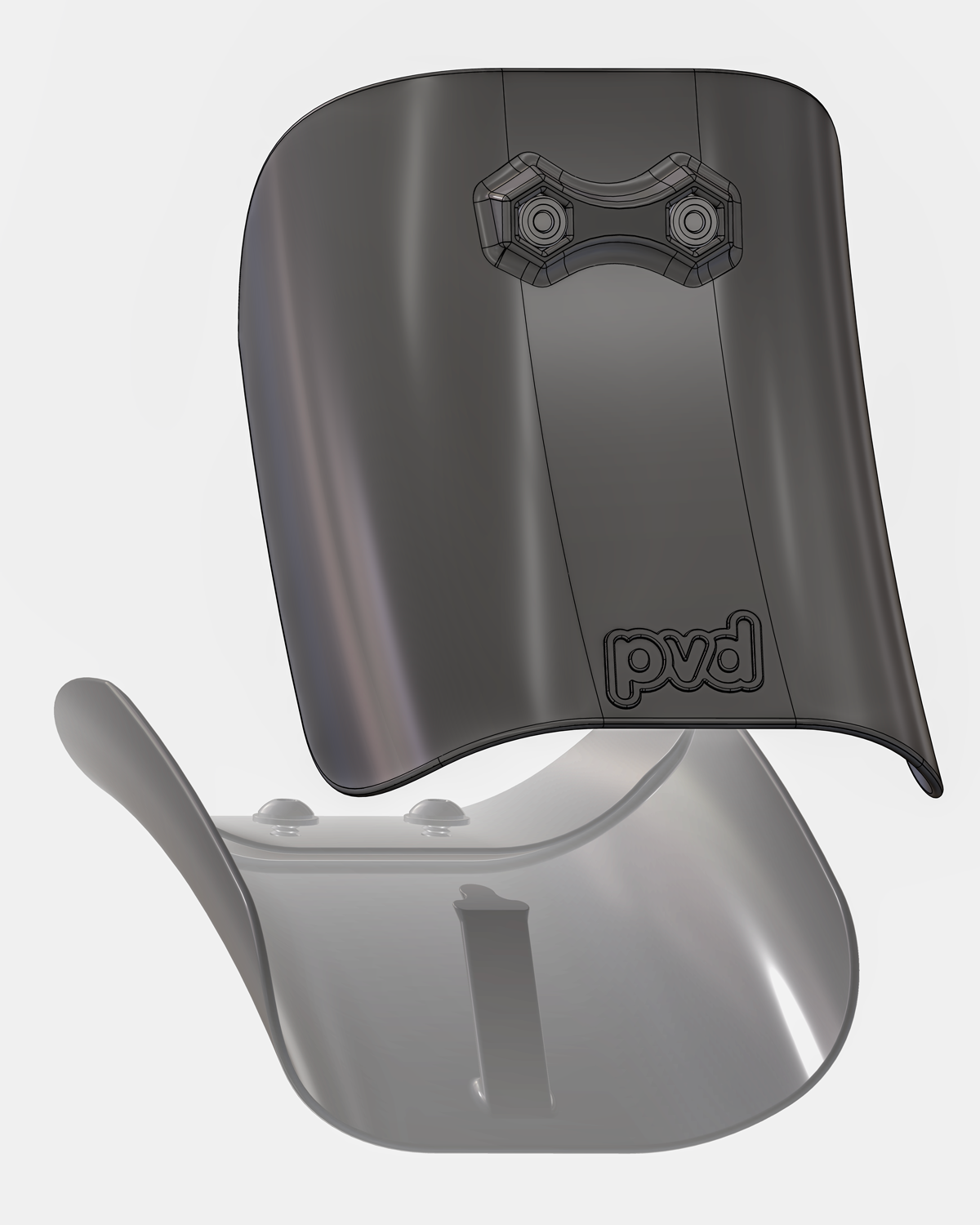
The fix, for now, is to make an extension at the rear side of the fender. I would print that in the new AnyCubic S1 extruder that we’ve been using in the shop. During prototyping, I’d tape the extension in place. Once finished, the stock fender will be drilled and extension taped and screwed fast with M4 stainless fasteners.
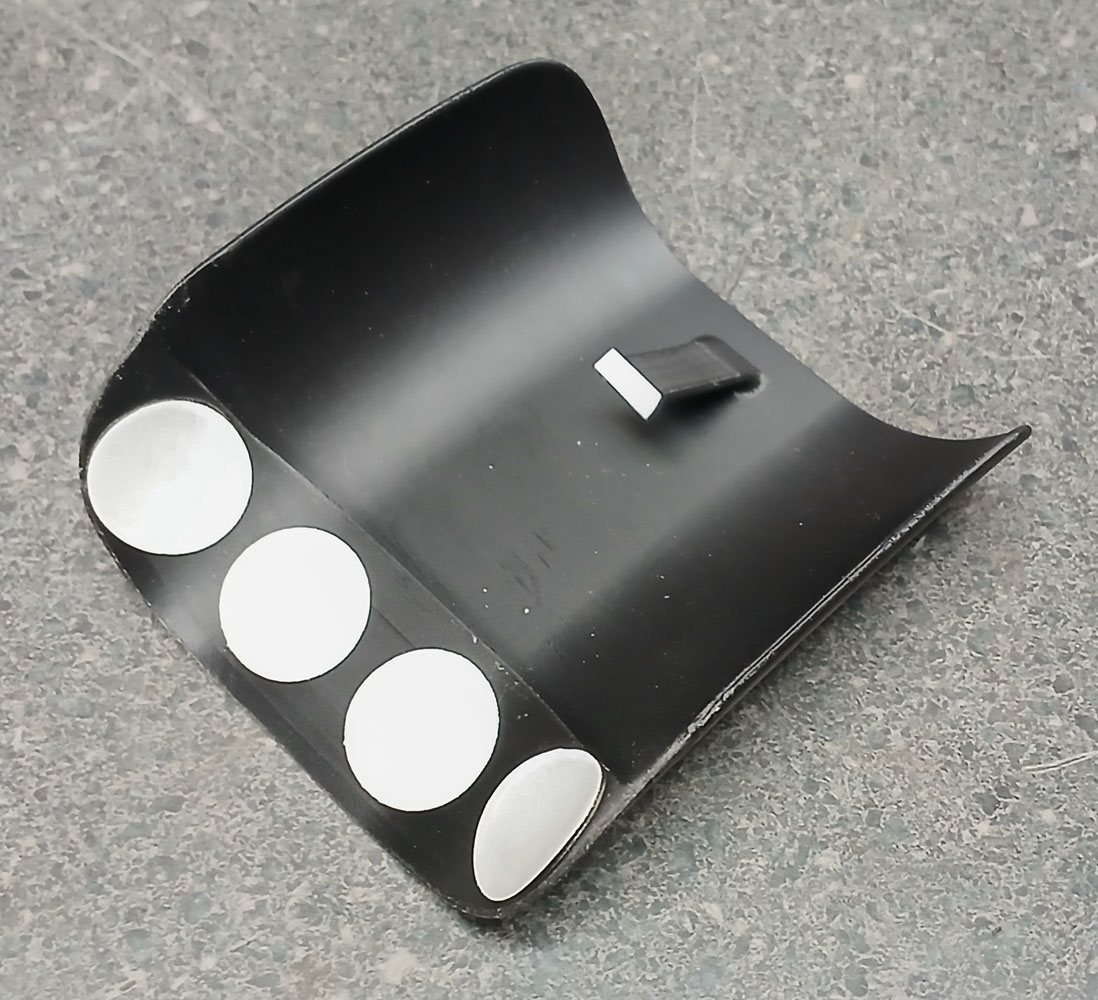
Removable round putty stickers seemed to do a good enough job holding prototypes during normal testing (other than the mishap below). Cheap stuff and leave everything clean once done.
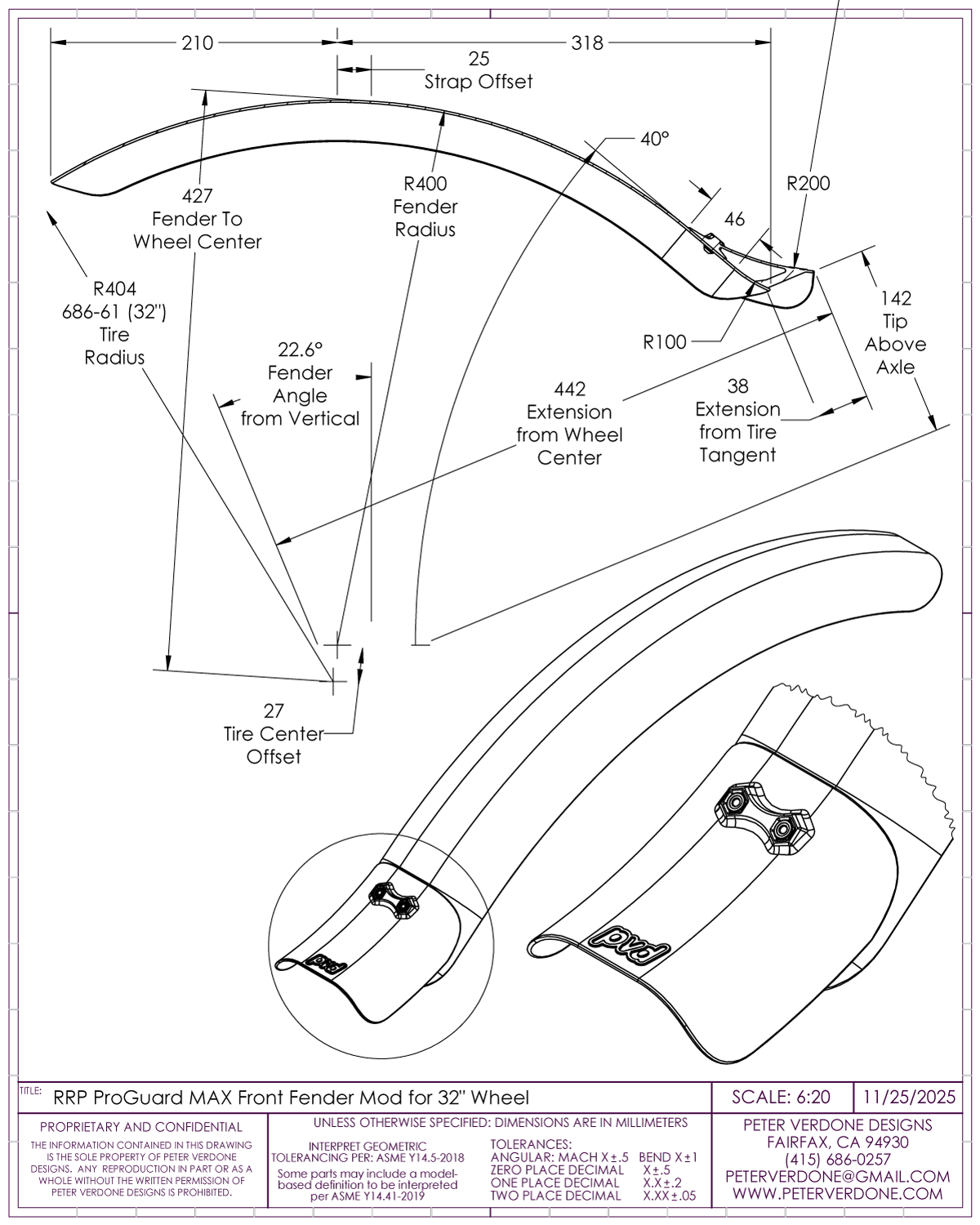
The hardest part of this project was producing a ‘good enough’ SolidWorks model of the fender geometry. This is crucial so that I could mate to it well. I’ll admit to being frustrated by this. It was a really pesky problem and I had to put way too much time and effort into a final product. I revised the method 4 times to produce a final understanding. I have a small pile of prints that didn’t fit well. The final print is very close to right.
I kept the end tip height of the extension the same as the original fender and extended 38mm. There is plenty of space to the rear of the fender and this seemed to be the most efficient way of increasing coverage at a lower weight.
I used CC3D PLA Max + Black filament. It’s nice and shinny.
During testing of an early shape, a failure turned into a design feature. I was going down Hobo when one of the side mounting zip-ties failed on the fork leg. This, surly due to the added weight at the end. Because I was being fancy with a laced tie, one failure meant that nothing held on that leg. The situation worsened even as I tried to ride the trail gently to save the fender from getting caught in the wheel. The other tie broke. Now both sides were free and it was a racket. At the bottom, the extension that I had taped in place was gone. I doubt that I’ll find it.
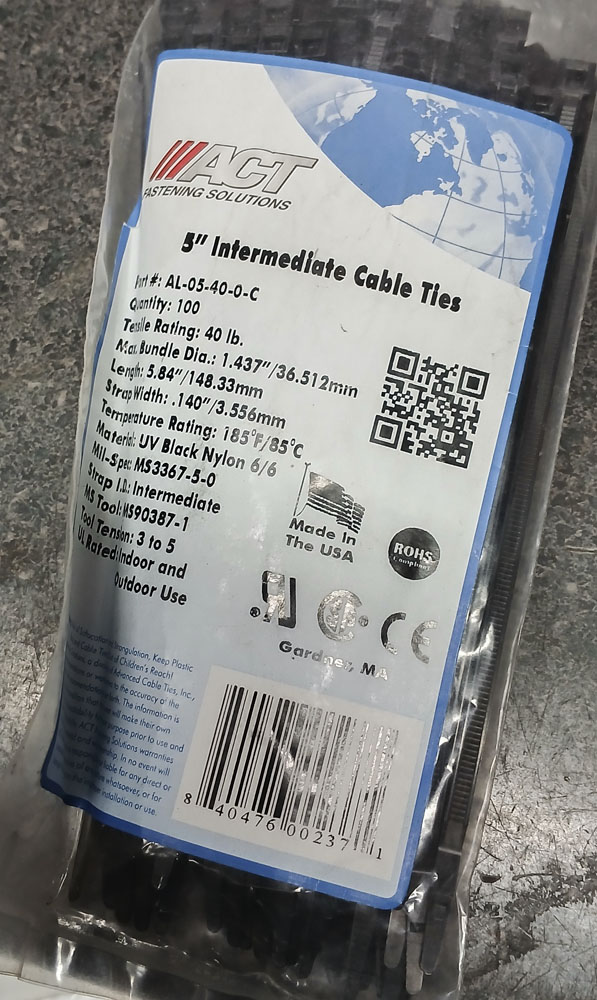
Of course, the failed 8″ miniature zip-ties were replaced with non-threaded 5″ intermediate ties.
I was talking about this with Windy. She figured that someone would find it and bring it to me. No. There was no marking on it to associate with me. Idea. So, because of this situation, a maker’s mark was added so that if the part came free again, the finder would know who it belonged to. Funny.
The takeaway here is that we need new fenders brought to market that will accommodate the large front wheels. The current crop are simply not sufficient for real riding.
If the newer RRP ProGuard V2 fenders have a very different geometry from what I show, please let me know so I can update this information.


